

Achieving creative flow in today’s digital-first world requires more than the right tools. It demands a holistic approach that nurtures your mind, body, and even your environment. By blending yoga practices, the grounding presence of pets, and mindful technology habits, you can build a sustainable workflow that boosts both productivity and well-being.
The Holistic Path to Creative Flow
If you’ve ever felt creatively stuck after hours at your desk, you’re not alone. The irony is that stepping away from work—doing a few yoga stretches, petting your dog, or unplugging from digital distractions—can spark your best ideas. There’s science behind this. When you take care of your physical wellness, find emotional grounding, and practice digital mindfulness, you create ideal conditions for creativity to flourish. Research shows that mindfulness practices strengthen mental skills linked to creativity, and reducing stress boosts cognitive flexibility (your mind’s ability to switch perspectives and think of new ideas). In other words, a calm, clear mind is a more creative mind.
Let’s explore how yoga, dogs, and digital wellness each play a role in building a more grounded (and creative) workflow.
Yoga: The Physical Foundation of Creative Flow
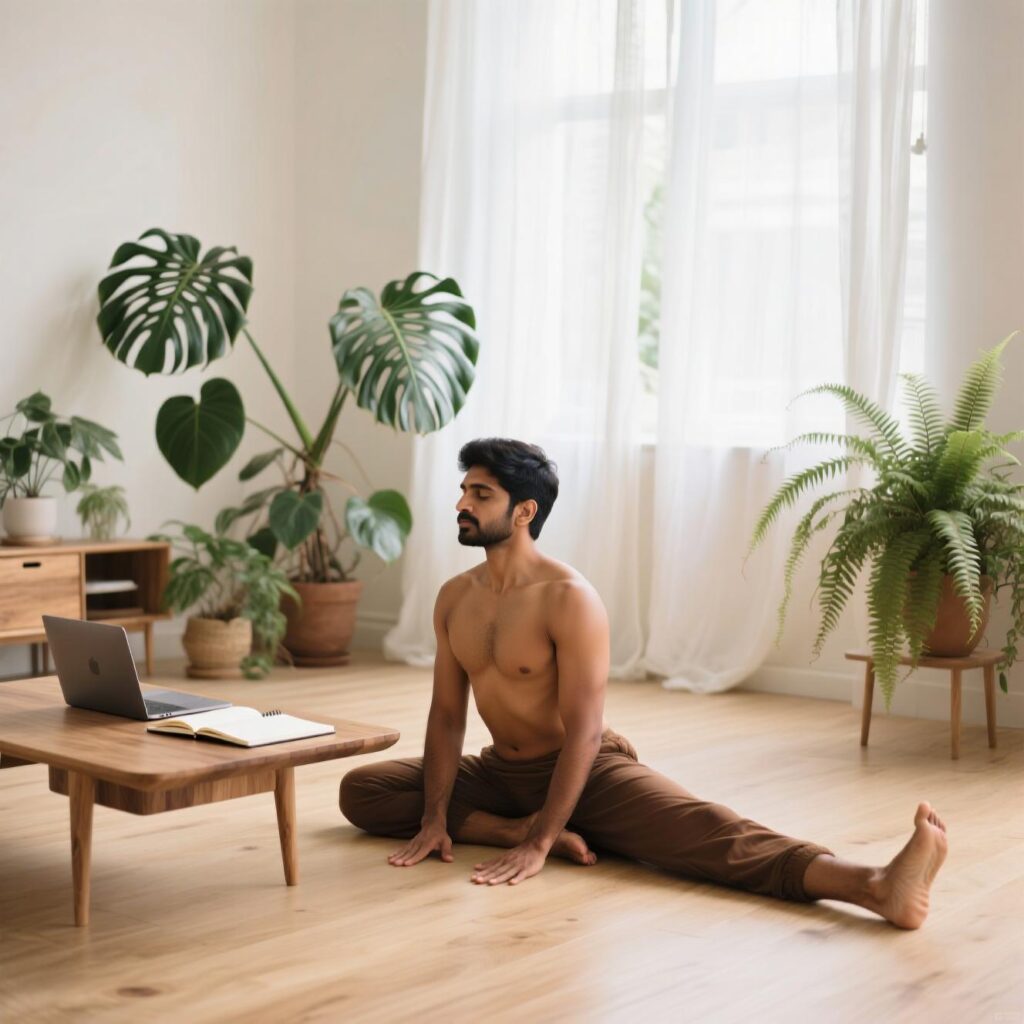
Think yoga is just about stretching? Think again. For creative professionals, yoga can be a secret weapon for the brain. Take the experience of a graphic designer who started doing a short yoga routine every morning. Instead of diving straight into emails, she spent 15 minutes with sun salutations and deep breathing. The result? She noticed her mind felt clearer and more flexible—almost as if those stretches loosened up new ideas too.
Mental Agility and Focus
There’s a reason many innovators meditate or do yoga. Studies have found that yoga and mindfulness practices can improve cognitive flexibility – essentially your brain’s agility in thinking. This means after a yoga session, you might find it easier to switch between concepts or approach a problem from a fresh angle. Ever had a eureka moment in the shower or during a workout? Yoga creates that same kind of mental openness on a regular basis.
Stress Reduction
We all know the feeling of creative block when we’re stressed. Chronic stress is a creativity killer – it muddles your memory, narrows your attention, and makes problem-solving tough. Yoga is well-known for reducing stress levels. When you move and breathe mindfully, you’re activating the body’s relaxation response, lowering cortisol (the stress hormone). In a more relaxed state, your mind is free to wander and make novel connections. Instead of your brain being stuck in fight-or-flight mode, it can play again. Many creative professionals find that after a yoga class or even a few stretches at their desk, they return to their work refreshed, with new ideas flowing.
Finding Flow
Perhaps most importantly, yoga trains you to enter a flow state. Flow is that golden zone where you’re fully absorbed in a task, time flies, and your best work pours out of you. Yoga’s focus on breath and present-moment awareness is essentially practice for flow. By concentrating on a pose or your breathing, you’re learning how to gently bring your attention back when it wanders. That skill directly translates to creative work – whether you’re writing, designing, or coding, you’ll slip into concentration more easily and stay there longer. Many artists and writers use yoga or meditation as a ritual to prime their minds for creativity.
Dogs: The Emotional Anchors of Creative Work
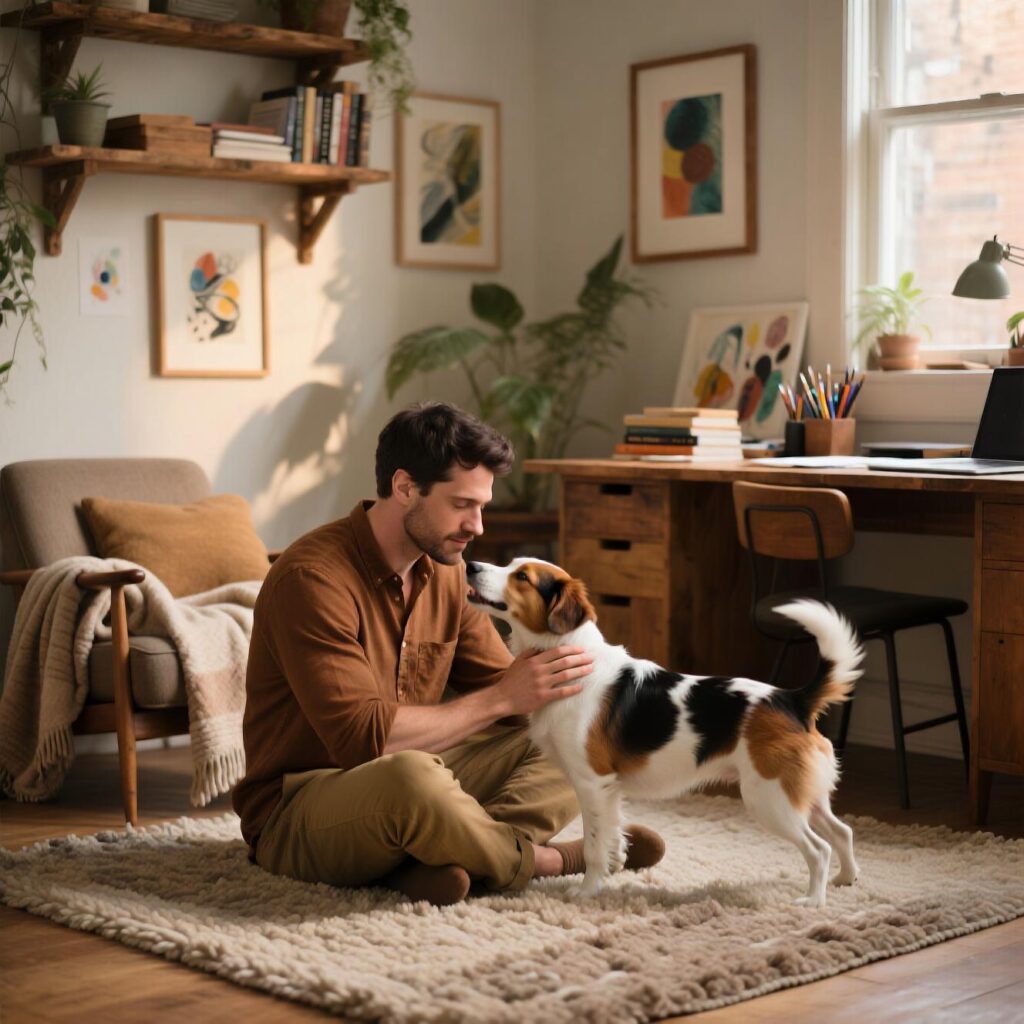
Now let’s talk about dogs (or really any beloved pet) and why having a furry friend around can supercharge your creativity. Imagine you’re working from home, struggling with a concept or stuck on a problem. Sensing your frustration, your dog wanders over and drops a toy in your lap or just gives you that “pet me” look. You take a few minutes to step away from the screen and play or cuddle. You laugh, your shoulders relax. When you return to the task, you suddenly see it with fresh eyes. That’s not just a lucky break – it’s the power of pets in action.
Stress Relief in Seconds
It’s amazing how a 10-minute break to pet a dog can reset your mood. Science confirms that even brief interactions with animals can reduce stress and anxiety. How? Petting a friendly dog releases oxytocin, often called the “love hormone,” in both you and the animal. Oxytocin helps lower stress hormones and blood pressure. One landmark study showed that people who spent just 10 minutes petting a dog experienced a significant drop in cortisol (a major stress hormone). In the middle of a hectic workday, those few minutes of puppy love act like a natural stress reset button. As one employee in a pet-friendly office described it, taking a moment to cuddle the office dog helped her “recharge her batteries” before jumping back into work. When your stress drops, your creative mind is free to come out and play again.
Mandatory Movement (Hello, Walks!)
Dogs also force you to take breaks and move around – which is a hidden gift for your creativity. If you have a dog, you know they won’t let you sit hunched over your laptop all day. Those regular walks aren’t just good for your body; they’re great for your brain. Researchers at Stanford found that walking can boost creative thinking dramatically – participants in a study saw about a 60% increase in creative output when walking versus sitting. So when your dog is begging for an afternoon walk, that’s actually your built-in creativity coach saying “let’s get those ideas moving.” Even a quick game of fetch or a stroll around the block can lead to a breakthrough idea that wouldn’t have come if you stayed glued to your chair.
Better Mood, Better Ideas
The emotional support from a dog is no small thing either. A wagging tail or a goofy grin from your pet can instantly lift your mood. This positive emotional shift can make a big difference in creative work. When you’re in a good mood, you’re more likely to think expansively and explore off-the-wall ideas. Dogs also inject a sense of playfulness into life – and creativity thrives on play. Some innovative companies know this, which is why pet-friendly workplaces are on the rise. Pets can act as social icebreakers and morale boosters. A dog wandering around the office might prompt colleagues to chat and laugh together, breaking down formalities. This kind of relaxed, connected environment is fertile ground for collaboration and fresh ideas. In short, dogs help create an emotional atmosphere where creativity can flourish.
Digital Wellness: Making Space for Deep Work
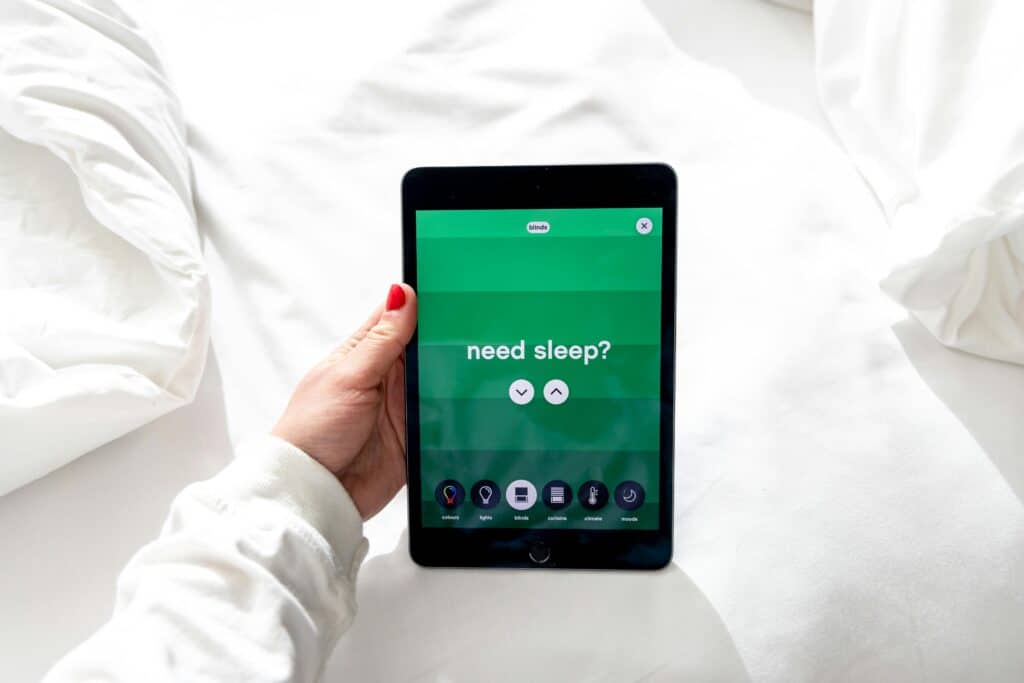
We live in an age of constant notifications, endless emails, and the pressure to always be online. For creative professionals, this digital overload is especially tricky – it can fill your mind to the brim, leaving little room for your own ideas to grow. Embracing digital wellness is about reclaiming that mental space so you can focus deeply on creative work instead of constantly reacting to pings and scrolls.
The Creativity Killer: Ever notice how you get your best ideas in the shower or on a long flight with no Wi-Fi? That’s no coincidence. When we’re constantly plugged in, our brains are busy processing information, notifications, and the dopamine hits of social media. The constant barrage of digital input can block our imagination, keeping us in consumption mode rather than creation mode. I used to have a bad habit of checking emails first thing in the morning and hopping between messaging apps all day. By evening, my brain felt like mush, and I had made little progress on actual creative tasks. I was mentally drained, not because of the work I created, but because of the information I consumed. This kind of digital overload leads to cognitive fatigue, meaning your brain just doesn’t have the bandwidth to daydream, strategise, or think creatively.
Setting Healthy Boundaries: The first step to digital wellness is setting boundaries with your devices. This can be as simple as carving out tech-free times and zones. For example, consider making the first hour of your morning a no-screen zone – use that time for your yoga practice, a walk, or planning your day on paper. You might also declare your lunch break a phone-free period to truly recharge. In the evenings, establish a “digital sunset” – a cut-off time after which you put away work emails and social media until the next day. Creating these boundaries protects your mental clarity. It might feel difficult at first (we’re so used to checking our phones constantly), but you’ll quickly notice you feel less scattered. One writer I know leaves her phone in another room when she needs to do deep creative work, and she swears it doubled her productivity. By controlling when and how you engage with digital devices, you reclaim control of your attention.

I’m a marketer, digital strategist and brand builder who thrives off a challenge. I have served in various organisations, handling content creation, social media management and brand awareness.
I started out in journalism, turned to course development for a digital marketing certification, and finally converted into the business-focused writer I am today. I became obsessed with marketing in 2015, started learning about it, practising it, and never stopped. Now, I develop unique content for companies equally obsessed. I’m a person who loves exploring being creative, yet practical. I care about tangible results and exceptional work.